Direct answer: design around real waste streams and the collection route
A kitchen waste and recycling cabinet brief should settle which materials the household separates, how much of each is produced between collections, where food scraps are handled, the container sizes, cabinet position, opening method, liner storage, ventilation or odour strategy, cleaning access and route to the building's or villa's main waste point. It should use actual insert and hardware dimensions before cabinet manufacture. The goal is not the maximum number of bins; it is a sorting system people can understand, use and empty consistently.
Audit one week of household waste
Before choosing a four-bin insert from a catalogue, observe what the kitchen produces. Separate food-contaminated residual waste, dry recyclable materials accepted by the collection system, glass if handled separately and any food-scrap stream the household actually uses. Record volume, not only category. Large lightweight packaging may need more space than heavier residual waste. Also note collection frequency and whether materials must travel through a corridor, lift or external service route.
- Residual household waste
- Dry mixed or separated recyclables
- Glass where collected separately
- Food scraps where an appropriate route exists
- Bulky packaging handled outside the daily cabinet
- Collection bags, liners and cleaning supplies
Choose a sorting model the household will actually follow
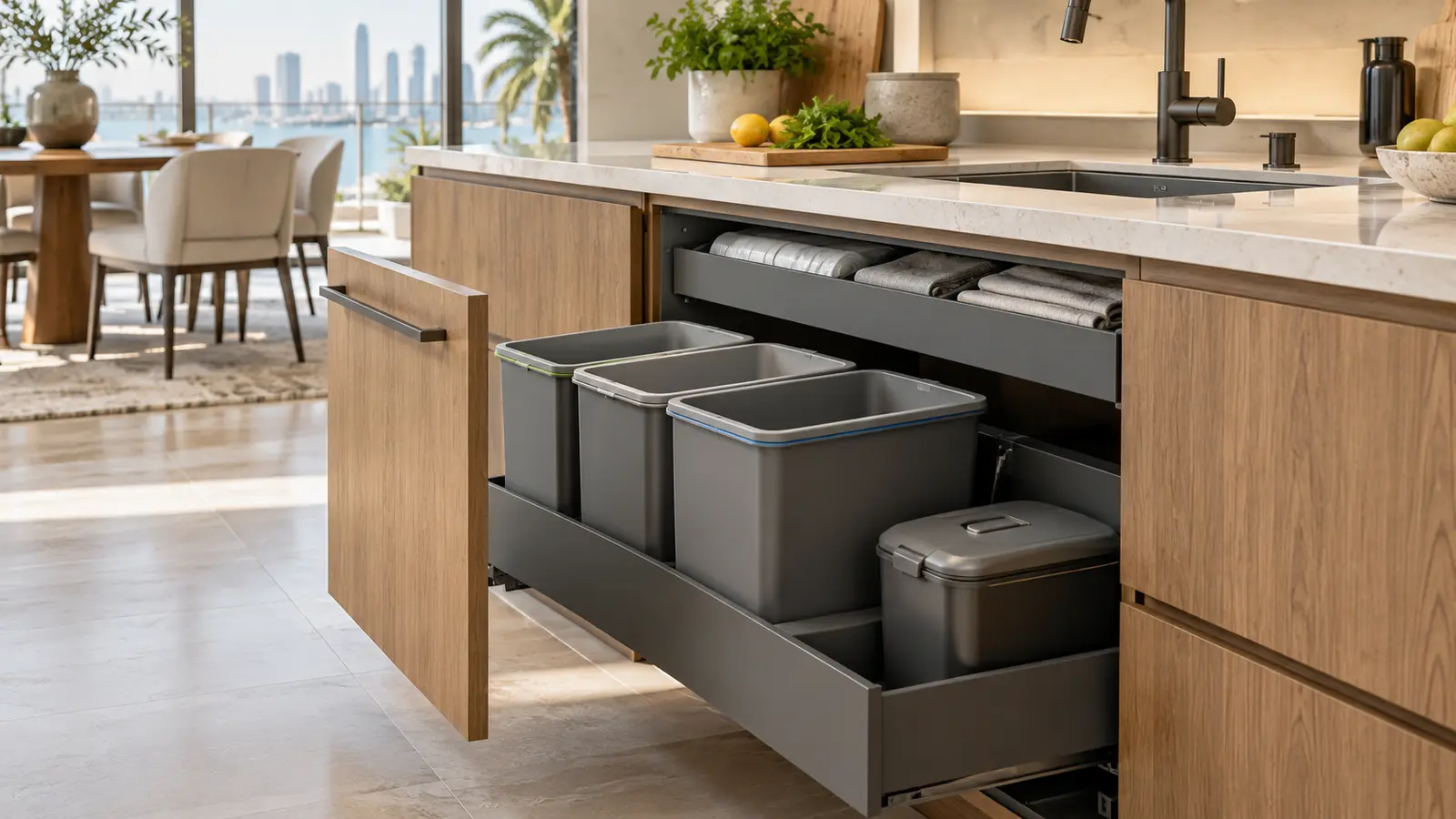
A single pull-out can combine the daily streams in one location, while two cabinets can separate preparation waste from dry recyclables. A small food caddy may sit close to the worktop with larger containers below; glass may be better near the exit if it is heavy and less frequent. Compare each model by clarity, steps taken during cooking, container weight, cleaning and route to collection. A sophisticated insert that confuses guests or household staff will perform worse than a simpler system with obvious positions.
- One station for all daily streams
- Preparation waste near the worktop
- Dry recycling in a larger secondary container
- Heavy or infrequent items near the removal route
Place the cabinet in the preparation sequence
The most frequently used container should be reachable from the main preparation area without crossing the cook or wash zone. Test the open pull-out against dishwasher and oven doors, adjacent drawers, island seating and the person using the sink. A bin positioned at the end of an island can be convenient for clearing but awkward during preparation. Map both routines and choose a priority rather than assuming one location serves every task equally.
Select actual containers and hardware
Record the insert manufacturer, product reference, container capacities, overall frame dimensions, runner type, rated load, door-fixing method and the space needed to lift each container out. Confirm whether a handle, pedal, sensor or push-to-open mechanism suits the household and adjacent cabinetry. Deep bins can appear efficient but become heavy or difficult to clean. The joiner should coordinate the complete system, not fabricate a generic void for an insert to be chosen later.
- Usable litres by waste stream
- Full pull-out depth and height
- Container removal clearance
- Runner load and fixing
- Door and handle geometry
- Replacement container availability
- Spare liner position
Separate waste from plumbing and clean storage
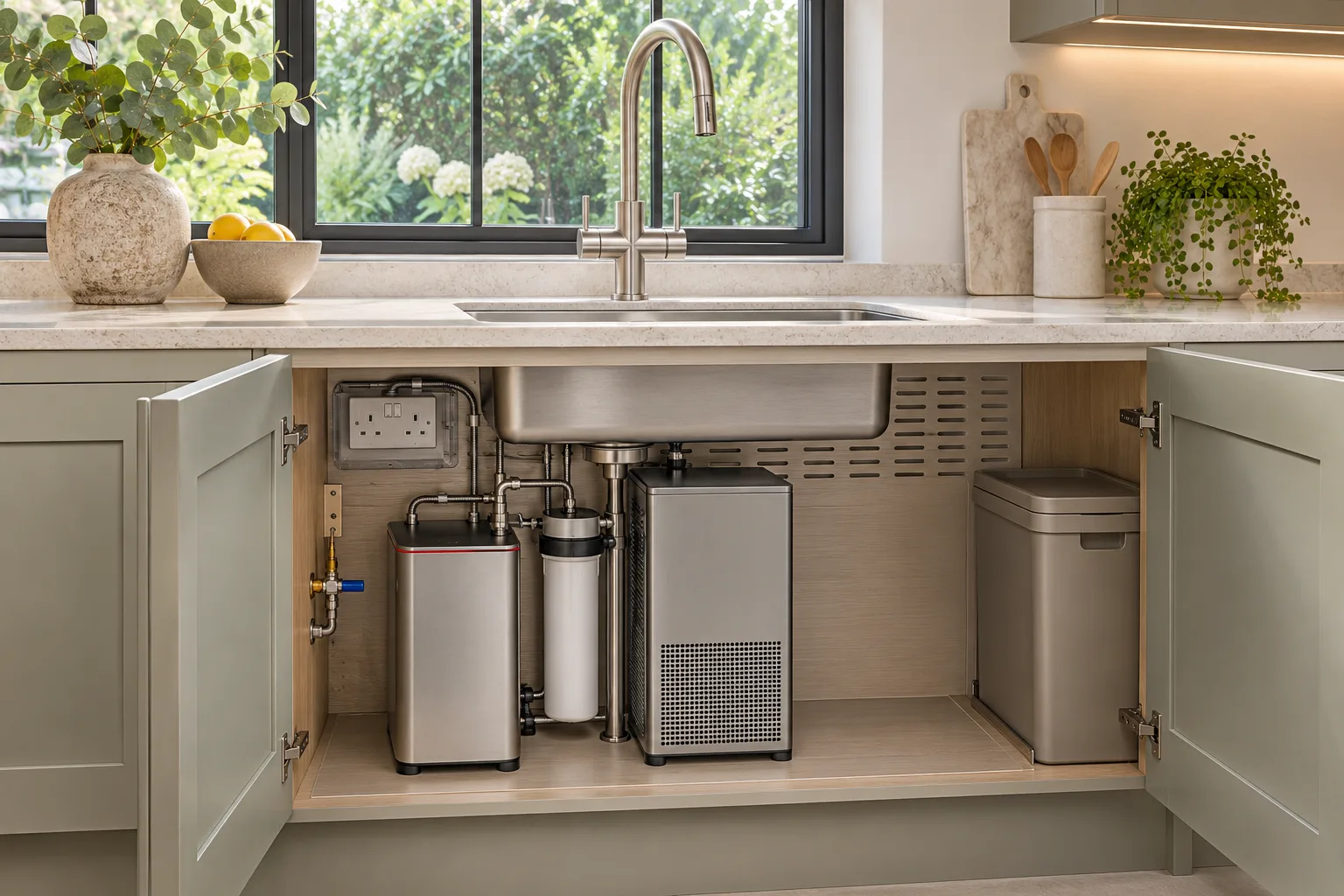
An under-sink cabinet may already contain supply valves, trap, filter, disposal equipment or cleaning products. Do not compress waste containers around services that need inspection or isolation. Keep liners and clean accessories protected from leaks or contamination, and give cleaning chemicals their own appropriate storage. If the bin cabinet sits beside the sink, coordinate splash-resistant and washable interior surfaces without blocking ventilation or hardware maintenance.
Make cleaning and odour control practical
Choose removable containers with reachable corners and a cabinet interior that can be wiped without dismantling runners. A food-scrap caddy may need a lid and more frequent emptying rather than a larger volume. Odour is usually managed through suitable separation, closure, cleaning and collection frequency; do not assume an unverified ventilation gadget will solve poor routines. Dubai Municipality's Waste Segregation Guide covers residential sectors and establishes the broader goal of clear separation and recycling practices in the Emirate.
- Smooth removable containers
- Accessible cabinet base and sides
- Lidded stream where appropriate
- No concealed ledges that trap spills
- Clear cleaning responsibility
- Emptying frequency matched to heat and use
Planning example
A fictional apartment household separates residual waste, dry recyclables and glass, with small food scraps collected separately. The first design divides a 600 mm cabinet into four equal containers. A one-week audit shows dry packaging needs twice the volume of glass, while the food caddy must be removed daily. The revised brief uses a larger recyclable container, a medium residual bin, a small lidded caddy at the front and a separate glass box in the service cupboard. The pull-out moves away from the sink plumbing and includes a shallow liner drawer above.
- Capacity follows measured volume
- Daily food-scrap removal stays convenient
- Heavy glass uses a short service route
- Plumbing remains visible and accessible
Pre-manufacture checklist
Use this checklist with the household, kitchen designer and cabinet supplier before approving workshop drawings.
- Waste streams match the current collection route
- One-week volume audit reviewed
- Container capacities assigned by use
- Exact insert and hardware selected
- Open pull-out tested against adjacent doors
- Removal and cleaning clearances demonstrated
- Plumbing and isolation remain accessible
- Liners and cleaning products have separate storage
- Food-scrap routine is realistic
- Workshop drawing shows product reference and dimensions
Limits and the next useful step
Collection rules and building facilities can change, and this guide does not classify hazardous or specialist waste or design a municipal storage area. Check current property-management and Dubai Municipality guidance for the applicable streams. The next useful step is a seven-day household audit followed by a cabinet mock-up using the shortlisted physical containers. Test the heaviest expected container as well as the empty one. Approve the insert, pull-out movement and emptying route together before the cabinet carcass is released for manufacture.
Sources & further reading
Make this useful for your project.
A review of your property and priorities can turn general guidance into a defined brief.
Explore our servicesDiscuss your project