Direct answer
Before cabinet manufacture, a built-in coffee-station brief should settle the exact machine type, overall and service dimensions, tank-fed or plumbed water, waste handling, electrical supply, ventilation, heat and moisture clearances, door system, operating height, cup and bean storage, preparation surface, lighting, cleaning route and a way to remove and service every appliance. Start with current manufacturer drawings, not a generic coffee-machine rectangle. Miele’s UAE product page for its CVA 7440 provides operating and installation instructions plus CAD and installation drawings, while Blum presents pocket systems specifically for concealing coffee and tea bars. Those references show how appliance and cabinet decisions must be coordinated, not copied across brands.
Choose the operating model first
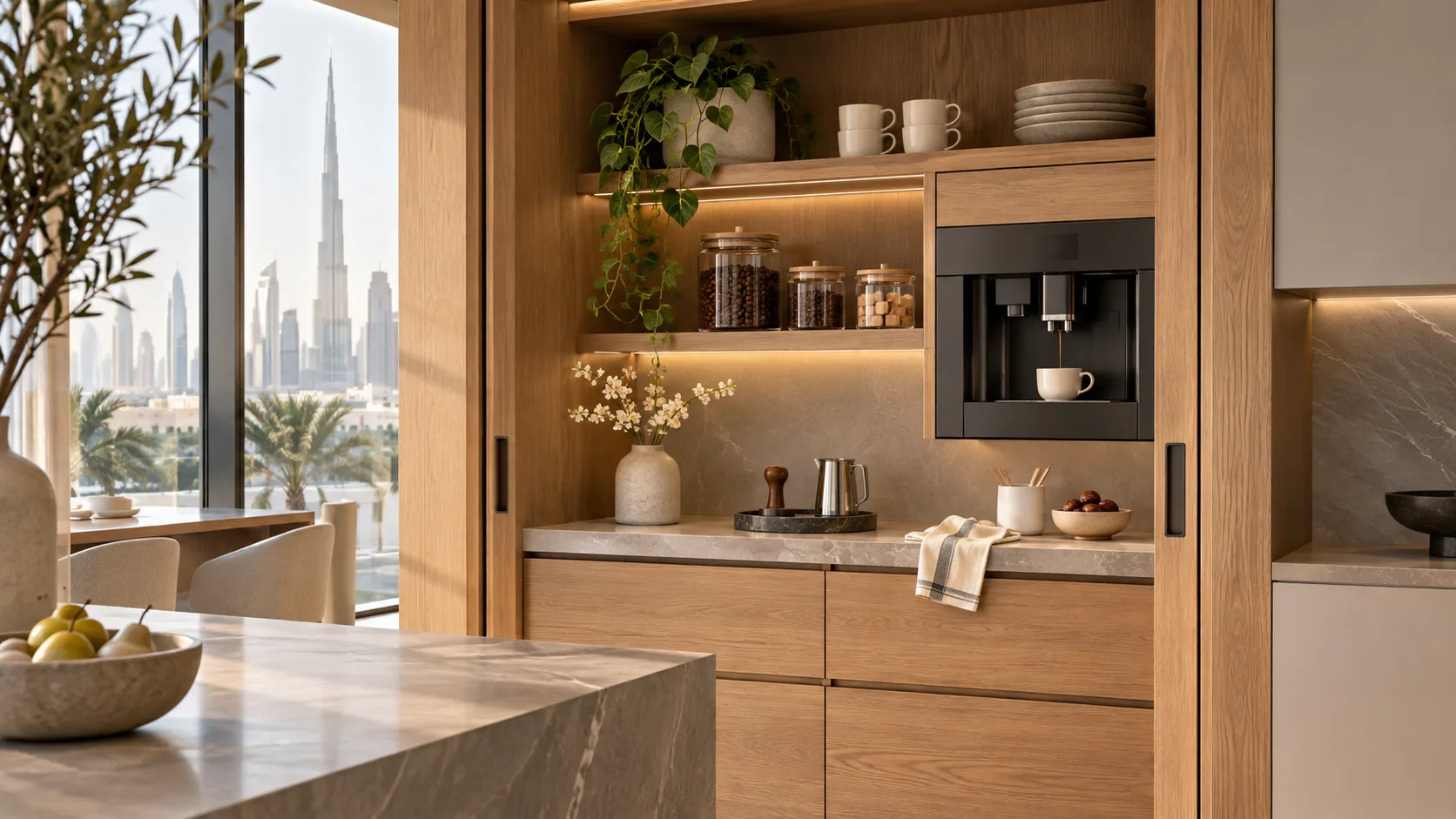
Decide whether the station uses a built-in bean-to-cup machine, a freestanding espresso machine, grinder and kettle, or a combination. List daily drinks, number of users, milk storage, cup sizes, bean and tea storage, knock box, used capsules, cleaning tablets and refill frequency. A built-in machine creates a clean elevation and fixed operating height; a freestanding setup can be replaced more easily but needs counter depth and overhead clearance. A concealed station removes visual clutter when closed but introduces door and ventilation constraints. The right choice follows routine, maintenance tolerance and appliance support, not the appearance of one reference image.
Freeze exact appliance data before cabinet approval
The appliance schedule should state manufacturer, model, dimensions, weight, door or service movement, cut-out, ventilation, power, water and drain requirements, tank or bean-container removal, cleaning access and local support information. Download the current installation drawing and attach it to the cabinet submission. If any product remains provisional, identify a dimensional allowance and the decision deadline; do not manufacture an exact niche around an unconfirmed model. Check plug, isolator and connection access without placing them where the machine blocks reach. Electrical and plumbing provisions require the appointed specialists and current local rules. A beautiful flush line is not acceptable if routine cleaning requires dismantling the cabinet.
Plan doors around operation and ventilation
Pocket doors can conceal the complete station without occupying aisle space when open, but the pocket width, front thickness, hardware, adjacent cabinet and worktop must be designed as one system. Blum’s REVEGO guidance describes integrated pockets and a countertop-height option for coffee and tea bars. Confirm whether the selected hardware permits the proposed application and how doors remain fully parked during appliance use. Never operate a heat- or steam-producing appliance inside a closed cabinet unless its manufacturer explicitly allows the arrangement. Keep ventilation paths open, protect door edges from repeated moisture and provide a straightforward cleaning route into the pocket and around the worktop junctions.
Design the workflow from cup to cleanup
Lay out cups, coffee, tea, sugar, spoons, filters, milk and waste in the order they are used. Place frequently used cups within comfortable reach and keep heavier supplies lower. Provide a landing area for filling a tank or setting down a tray without blocking the machine. A nearby refrigerator can help milk service, but its door should not collide with the station. Decide where drips, grounds and packaging go; a small removable waste bin may be more useful than a deep drawer. Choose a non-porous, cleanable preparation surface and a splash detail that does not trap residue. Integrated lighting should illuminate the worktop without glare and keep its driver serviceable.
Planning example
Planning example: a fictional apartment kitchen shows a built-in coffee machine above two deep drawers behind double pocket doors. The first drawing looks symmetrical, but the machine’s water container cannot be removed under the shelf, the pocket consumes space needed for ventilation and the nearest cup drawer collides with an open refrigerator. The revised design uses the exact product installation drawing, raises the shelf, selects a compatible pocket configuration, moves cups to a shallow drawer and preserves a removable service panel. Power and any water connection are reviewed by the appointed specialists. This scenario demonstrates coordination only; it is not a completed project or an installation instruction.
Allow for replacement and service
Coffee machines are maintained and eventually replaced more frequently than the surrounding cabinetry. Provide a removal path, lifting space and access to connections without damaging stone or fixed fronts. Ask how a service technician reaches filters, valves, sockets, drains and ventilation components. Keep a record of niche dimensions and maximum acceptable replacement size. Avoid designing a unique decorative trim that depends on one discontinued model unless a replacement plan is accepted. For freestanding machines, confirm counter strength, anti-tip stability where relevant and cable management while preserving the ability to pull the unit forward. The handover pack should include manuals, cleaning guidance, filter references and the cabinet access sequence.
Checklist before cabinet manufacture
Release the station only when the appliance schedule and cabinet drawings describe the same working setup.
- Define drinks, users, appliance type and maintenance routine
- Select exact locally supported appliance models
- Attach current installation and service drawings
- Coordinate power, water, waste and ventilation with specialists
- Confirm tank, bean, cup and cleaning-component removal clearances
- Verify pocket-door hardware, parking position and adjacent cabinets
- Provide cup, ingredient, milk, tray and waste storage
- Protect finishes from heat, moisture and frequent cleaning
- Keep connections, drivers and service panels accessible
- Plan appliance removal and a realistic future replacement envelope
Limitations and next step
This article does not design electrical or plumbing services, approve appliances in enclosed cabinetry or replace manufacturer installation instructions. Exact clearances, ventilation, connections and operating limits come from the selected products and appointed qualified professionals working to current Dubai requirements. The next step is a coordinated coffee-station pack containing the routine brief, appliance schedule, manufacturer drawings, cabinet plan and elevation, critical section, door-hardware layout, service-access diagram and finish sample. Review it with the cabinetmaker and appliance supplier before manufacture. If the machine or door system changes, reissue the pack and recheck every interface. Do not let a nominal niche width or a catalogue image substitute for coordinated product information.
Sources & further reading
Make this useful for your project.
A review of your property and priorities can turn general guidance into a defined brief.
Explore our servicesDiscuss your project